How Students in Underfunded Districts Close the Coaching Gap and Win Tournament Rounds
Free tools and deliberate practice help debate students overcome coaching gaps.
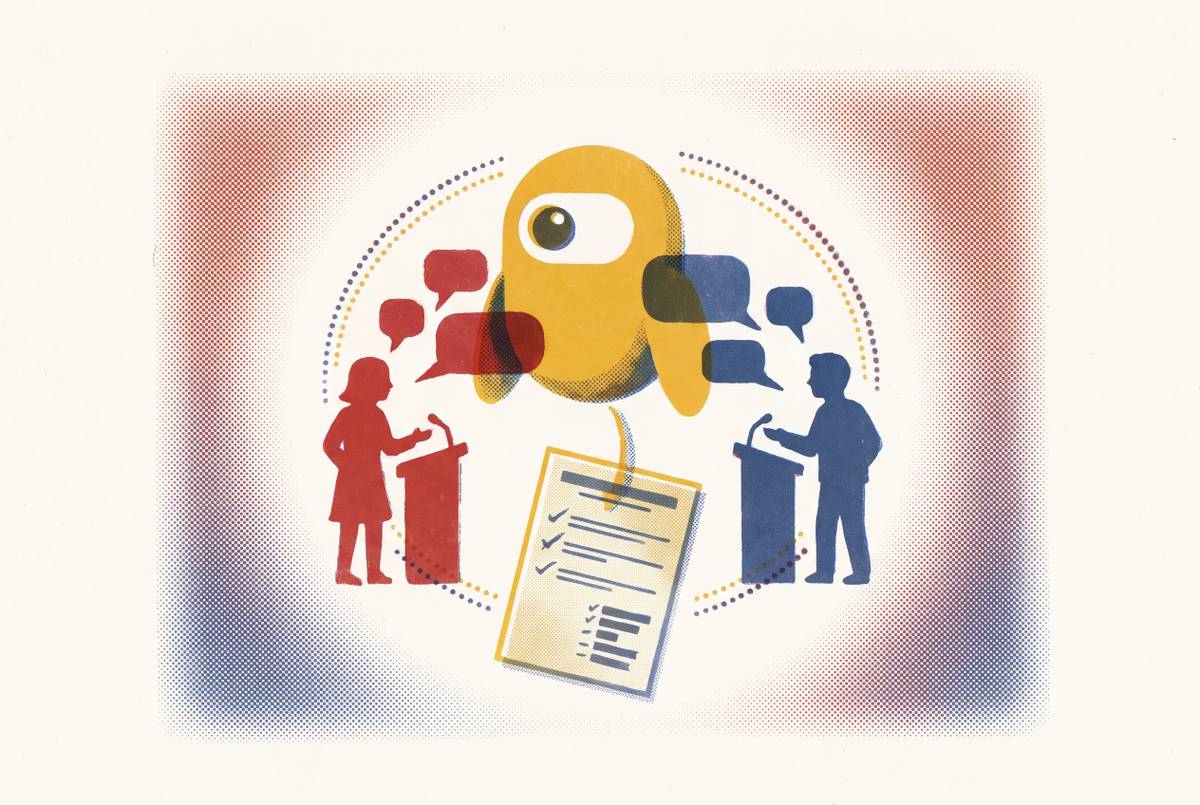
Students in underfunded high school programs can narrow the coaching gap through deliberate, opponent-tested practice that ends with a decision and written feedback. DebateThis has structured rounds against humans or AI with no signup wall, while Debate Arena and WinDebate help students prepare and practice in specific formats. For programs seeking free or low-cost tools, access and price must be distinguished. The available details do not establish that every feature is free.
Why underfunded debate programs are structurally disadvantaged, not motivationally lacking
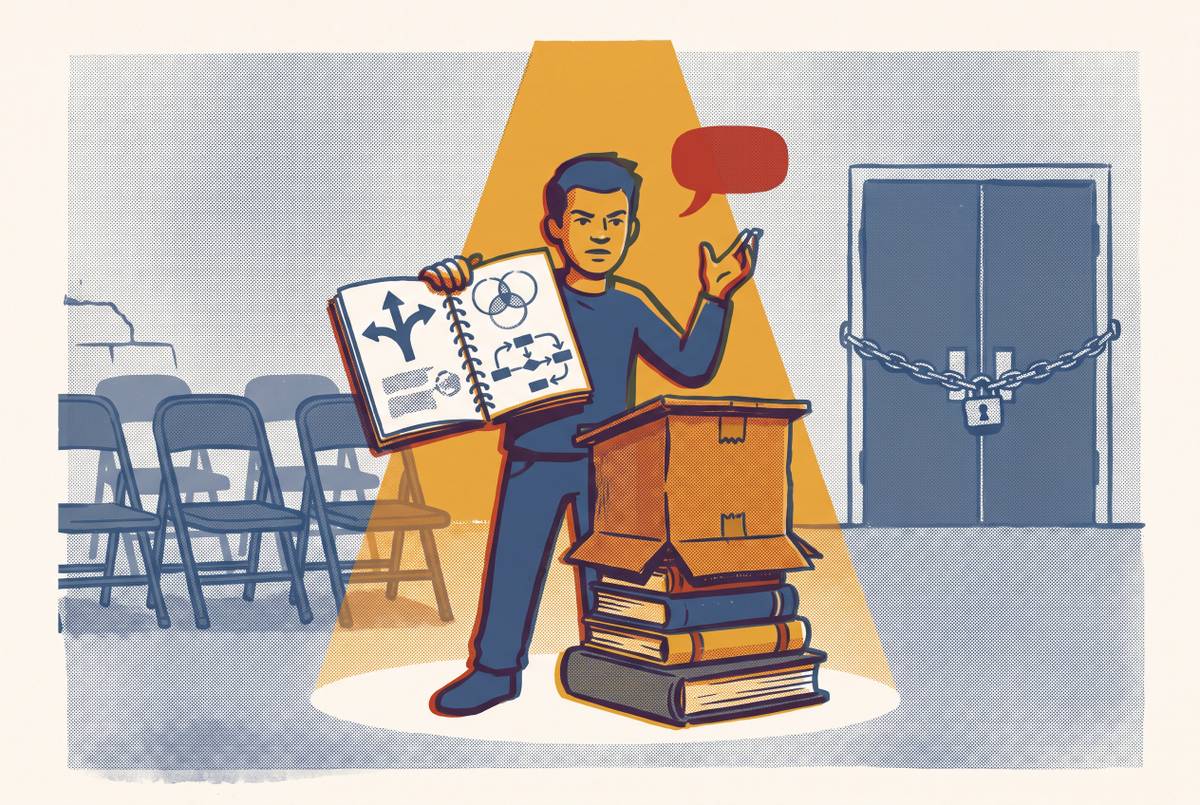
At Orange High School, the charter bus pulling away with trophies marked a divide that extended well beyond the tournament results. The student-run team had competed against private schools whose rosters included dedicated lawyers and administrative staff who booked flights and reserved hotels. Orange had no coach to guide its students. Private-school competitors received on-the-spot, in-round coaching, the equivalent of a sideline coach adjusting strategy mid-game.
An AP research project surveying every Wake County public high school found that schools with the highest Black and Latino populations were the ones without debate teams. Economic and racial exclusion overlapped in access to competition itself. Administrative decisions then compounded the funding gap through denied fundraiser requests, questioned excused absences, and practice space reassigned to higher-priority activities. Praise for “college readiness” did not provide operational support. Large Title I schools could be as underfunded as small rural ones because institutional priority, rather than school size, determined resources.
That disadvantage follows students into the round. Camps, prep databases, private coaching, frequent tournaments, and experienced judging pools supply inputs that competition rewards. A student who lacks those inputs cannot close the gap just by working harder under the same conditions. Students need another way to get practice and feedback that still takes those unfair conditions seriously.
What institutional fixes exist and why students cannot wait for them
Florida’s $2.4 million allocation for the 2026–27 school year supports the Florida Debate Initiative across all 67 school districts. The commitment is substantial, but its reach has limits. Lawmakers approved less than the original proposal sought, leaving competition travel costs unfunded. During the 2025–2026 school year, the initiative also distributed stipends to coaches statewide, spreading support across an entire state’s coaching workforce.
Other efforts address different parts of the gap. The Los Angeles Metropolitan Debate League expands access for lower-income and minority students, but urban leagues are concentrated in major metropolitan cities and depend on uncertain donor funding. The Wake County Debate Initiative and a commitment from the A.J. Fletcher Foundation represent local momentum limited to those communities. Students elsewhere still have competitive careers unfolding now. What they can control is the frequency and quality of their own practice, even while institutions work to broaden access.
Why debate skill responds to deliberate practice the same way chess does — and what that means for self-coaching
Debate and chess share a training mechanism. Study builds knowledge, but playing or debating against others again and again tests whether students can use what they know to make decisions under pressure. Timed speeches, limited preparation, and a live opponent require time management, argument prioritization, and adaptation that reading or writing alone cannot develop. A prepared argument has to hold up when someone tries to defeat it. That encounter can expose flaws that are hard to see on the page.
Assigned sides help students learn to argue a case apart from what they believe. A student required to argue both for and against a resolution must understand competing reasons. Students learn to see another side by arguing against it as well as hearing it. It also changes what counts as successful preparation. Knowing why the other side is persuasive becomes part of building a defensible case.
A well-funded program organizes this learning through feedback between rounds, flow review, and strategic adjustment. Self-coaching must recreate that loop through other means. Judged rounds against real opponents provide the same kind of repetition that camp and tournament exposure supply, though they do not reproduce every benefit of coaching. Access to those repetitions is now a variable students can control.
How to build a practice habit without a team or a coach
For a student building that loop independently, the fundamental practice unit should be a completed round with a decision. Reading, watching, and preparing support the round but do not replace it. The decision connects preparation to what the student actually said under competitive conditions. Written feedback then shows what to work on in the next attempt. Without that connection, additional preparation can accumulate without testing whether performance has improved.
Solo AI rounds are the easiest way to start because students can practice without setting a time or finding an opponent. Repeating the same resolution from the opposite side makes perspective-taking part of the routine. Live 1v1 rounds should supplement that work because human opponents introduce the unpredictability of tournament competition. The two forms serve different training needs.
Between rounds, students can work on card-cutting on their own. Selecting relevant evidence excerpts, underlining key points, and crafting a concise oral summary turns research into material that can be used in a speech. This helps students use what they have prepared to sound prepared when they speak. Consistency is more useful than an isolated burst. Three judged rounds per week with written feedback provide more usable repetitions than a single intensive camp followed by dormancy.
What tools help high school debate students practice without a coach
Debate Arena offers AI opponents for British Parliamentary, World Schools, and Public Forum, with real-time AI feedback. British Parliamentary requires the paid Gold plan. That restriction is important for a program comparing access against budget. Format support alone does not establish affordability, and the available pricing details do not support labeling the full toolkit free.
WinDebate covers six formats, including Public Forum, Lincoln-Douglas, Congressional, Policy, World Schools, and British Parliamentary. Before a round, it builds both sides, evidence, and rebuttal trees. Its Live Round Assistant captures speeches mid-round and develops attack, defense, weighing, summary, final focus, and cross-examination drills from what was said. Its distinguishing feature is the link between speeches and subsequent drills. That differs from choosing a tool primarily to supply an opponent.
DebateThis runs structured 1v1 debates against humans or AI in three rounds, with real ELO ranking and no signup wall. Rebuttal Live instead supports rooms of two to twenty people arguing one topic through text or voice. Its AI judge scores every argument on a 0–30 scale, awarding bonuses for evidence and direct responses and penalizing repetition or departures from the topic. ELO progression runs through eight tiers to a global leaderboard. These are different practice environments, so the choice should follow the student’s format and feedback needs.
Debate Land aggregates competitive high school results, team and judge rankings, statistics, and tournament calendars for Public Forum and Lincoln-Douglas. Those resources support competitive preparation. Together, the options distinguish three needs that a small program must otherwise meet itself, namely opposition, feedback, and circuit information.
How to pick a side on any resolution and build a case without a coach walking you through it
For independent case-building, the starting point is the judgment a resolution asks a debater to defend. Whether AI is powerful is a question of fact. Whether AI should make final hiring decisions raises questions of fairness and accountability. The distinction identifies the burden before research begins. Technology and policy details can shift quickly, while tensions between liberty and safety, efficiency and dignity, or innovation and precaution remain recognizable to judges.
The September/October 2025 Lincoln-Douglas resolution, “In the United States criminal justice system, plea bargaining is just,” illustrates this distinction. Its central dispute concerns procedural fairness versus systemic outcomes. A self-directed student should identify what makes the practice just or unjust before collecting descriptions of how it works. Evidence then serves a standard of judgment. Without that standard, accurate research may never establish why the side should win.
The 2026 NSDA Nationals resolution, “Democracies ought to prioritize the protection of civil liberties over national security,” similarly places two goods in tension. Preparation must address why one deserves priority when they conflict. The February 2026 Public Forum resolution, “The Federal Trade Commission should establish a federal regulatory framework for sports betting,” required depth in antitrust law, regulatory theory, and public health. A values-first approach identifies the affirmative burden of proving regulatory benefit and the opposing appeal to market freedom before researching either.
Card-cutting then connects this framework to the speech. Students should distinguish excerpts that supply logical support from those that provide emotional force or structural context. Each has a role, but they are not interchangeable. A case holds up better when its evidence helps meet its burden than when it just shows how much research went into it.
What AI judging scores, what it misses, and how to read a decision usefully
AI judging can reward form without fully capturing depth. It does not reproduce all the dynamic reasoning a human judge observes during a round, so its scores should not be treated as equivalent to human judgment. Its practical strength is narrower and still useful. Clarity, structure, and responsiveness are early failure points for students without coaching, and AI feedback can make those weaknesses available for immediate review.
A well-structured AI decision contains the motion, decision, reasoning, speaker points, and changes each side should make next round. AI judges also do not favor a debater’s name, reputation, or school affiliation, a useful distinction where familiarity with established programs can influence human judging. Live 1v1 rounds are still needed to help students learn to think on their feet, a skill that scores on form cannot fully measure.
Students should locate the specific moment the judge identifies and work backward to the argument, response, or omission that produced it. A comment grounded in what was actually said offers a clearer revision target than a general impression. The next round can then test that revision. The value lies in turning a written decision into a change in performance.
How competitive tracking and debate culture can accelerate development outside the school system
ELO systems show how students are doing even outside tournaments. A student unable to afford frequent travel can still accumulate a ranked record through live debate platforms. A public leaderboard functions like a chess rating by giving repeated practice a competitive reference point. That visibility can sustain the habit when no school team supplies routine or recognition.
As of September 28, 2026, Debate Land’s 2026–2027 varsity rankings are live, giving self-directed students access to the team and judge data that well-staffed programs use for preparation. Tracking the judging pool at target tournaments connects independent training to the setting where it will be tested.
The wider debate culture, including streamer culture, gives students another way to connect outside a school program. Participation in a wider community can make independent training feel less isolated, but visibility is not itself evidence of improvement. The substantive measures remain completed rounds, ranked performance, and decisions that explain what needs work.
The one thing tools cannot replace, and how to build it anyway
Sustained mentorship is the strongest limit of self-directed practice. AI coaching and judging shorten the feedback loop, but they cannot reproduce the relationship that keeps a student engaged when results are discouraging. The hardest task is often persistence. A practical substitute is a peer accountability structure in which training partners run rounds, track each other’s scores, and review decisions together. Practice can remain solo or AI-judged while accountability remains human.
Support can also be rebuilt across institutional boundaries. Mountain View High School and Los Altos High School in California share coaching resources across campuses, illustrating how student-centered programs can organize beyond a single school. Such arrangements leave unequal funding in place and show that the absence of an assigned coach need not determine the final shape of a student’s support network.
The student at Dublin High School who competed nationally for three years without a school program or coach demonstrates both the possibility and its cost. Independent preparation came with complex registration processes and fees paid out of pocket. The result included placements at major tournaments in Dallas, Los Angeles, Chicago, Atlanta, and Las Vegas. That record showed what a student could produce without waiting for institutional failures to be repaired.