The Independent Debater's Playbook When Your School Killed the Program
Rebuild opponents, structure, feedback, and goals without a school team.
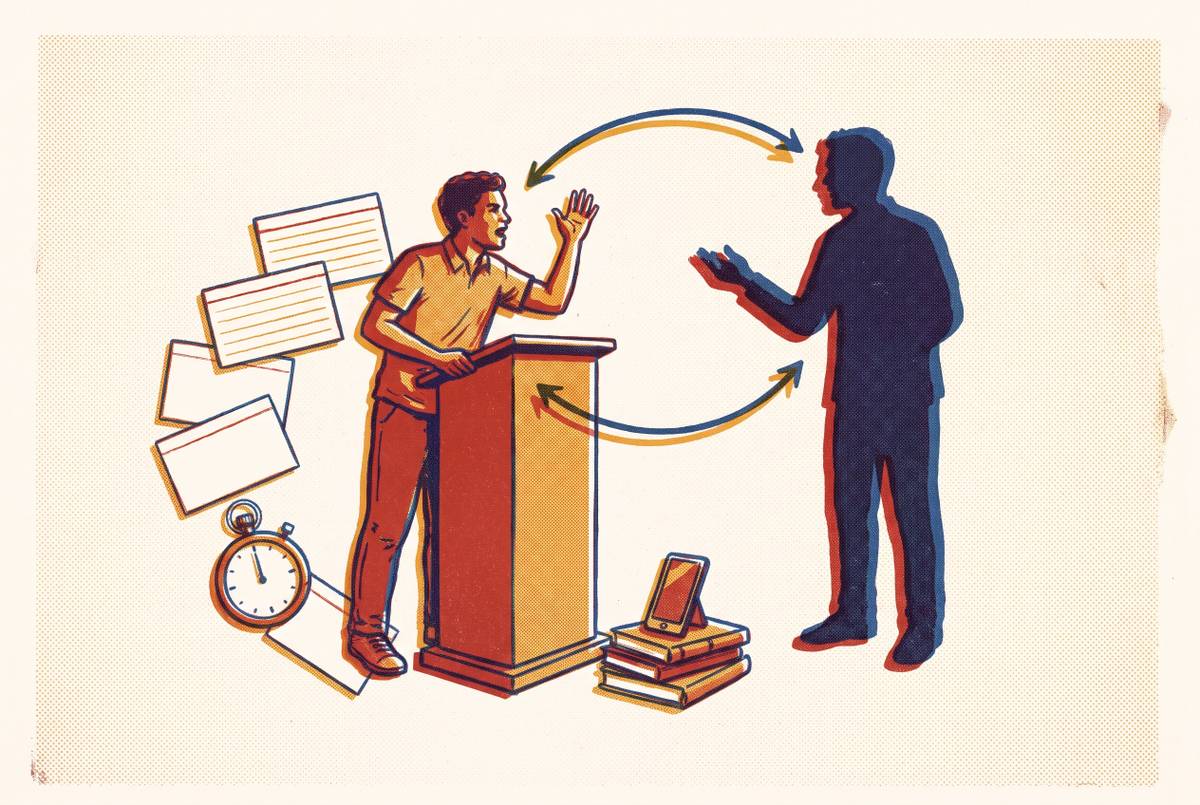
A school debate program can disappear without ending a student’s development. For underfunded high school programs seeking free or low-cost practice, PublicForumAI, ArguFight, and live voice platforms offer different routes to rounds and feedback, though the information available here does not establish their prices. The independent debater’s task is to rebuild four functions deliberately, namely opponents, structure, feedback, and a competitive goal.
Why debate programs are disappearing and what that actually means for the students left behind
Debate cuts follow several structural pressures. When enrollment falls, per-pupil revenue falls, and electives absorb the first cuts. Pandemic-relief money that sustained programs through 2024–2026 has also run out.
Money is not the only point of failure. Ames High in Iowa faces a shutdown because replacing a 14-year coach has proved impossible, illustrating the dependence on scarce expertise, particularly in policy debate. The IHSA’s 2023 decision to rescind debate as a sponsored activity created a different institutional break. A 2024 petition to reinstate it documented a fractured landscape of separate tournaments, while de-sponsorship gave schools a pretext to reduce already strained funding.
El Camino College’s team, ranked No. 1 among community colleges in the National Parliamentary Debate Association, saw its budget halved in 2024 and could no longer compete nationally or internationally. The University of Oregon’s Clark Honors College cut staffing support for the UO forensics program, forcing cancellation of the Robert D. Clark High School Invitational Tournament. These losses also take away chances to compete from students on other teams.
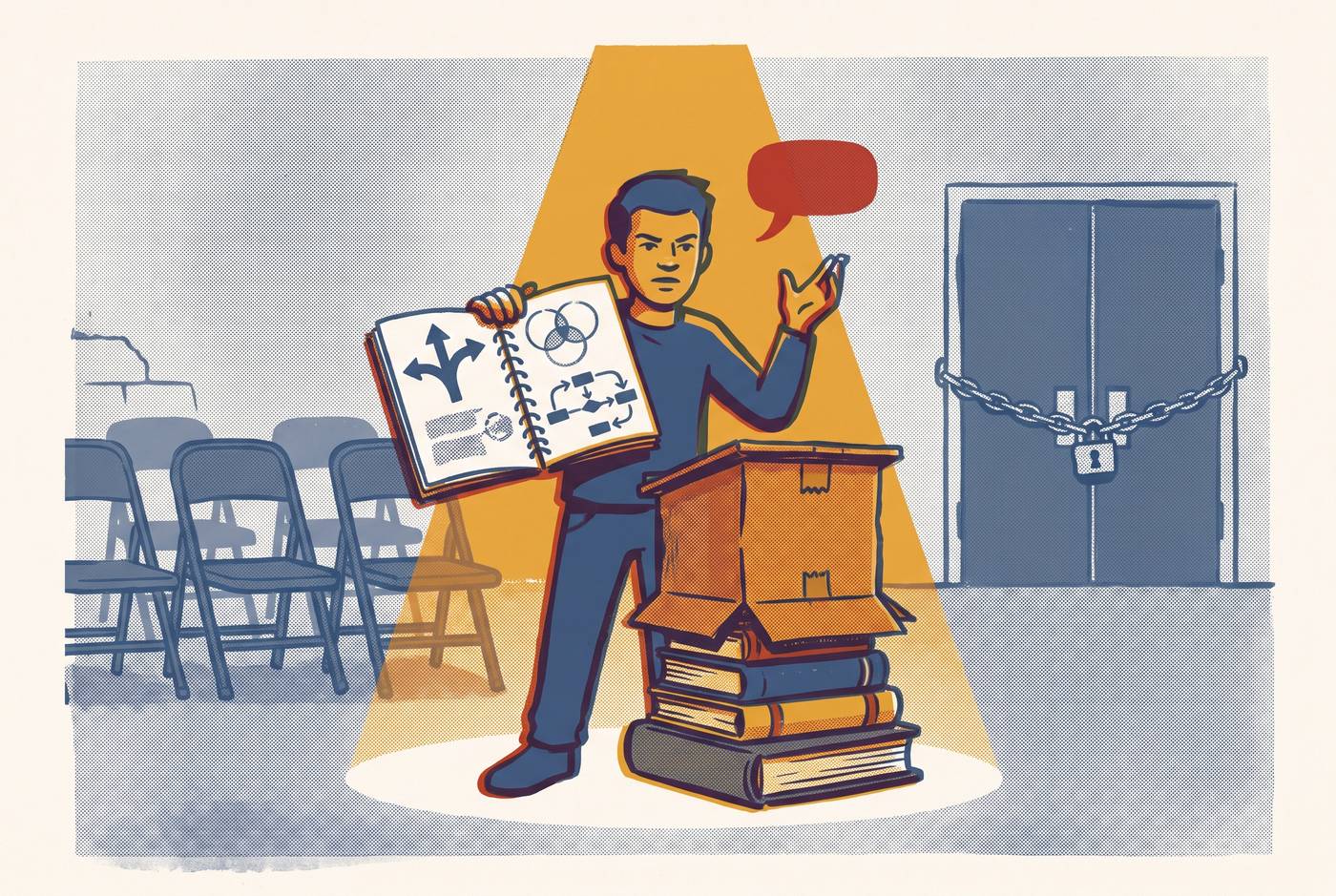
The burden falls hardest on under-resourced schools, whose students have the fewest alternatives. Waiting for reinstatement therefore leaves development dependent on decisions outside a student’s control. The competitive circuit, however, has not collapsed. Its skills remain learnable, and rebuilding access begins with separating the work of debate from the institution that previously organized it.
Why losing a program is not the same as losing access to debate development
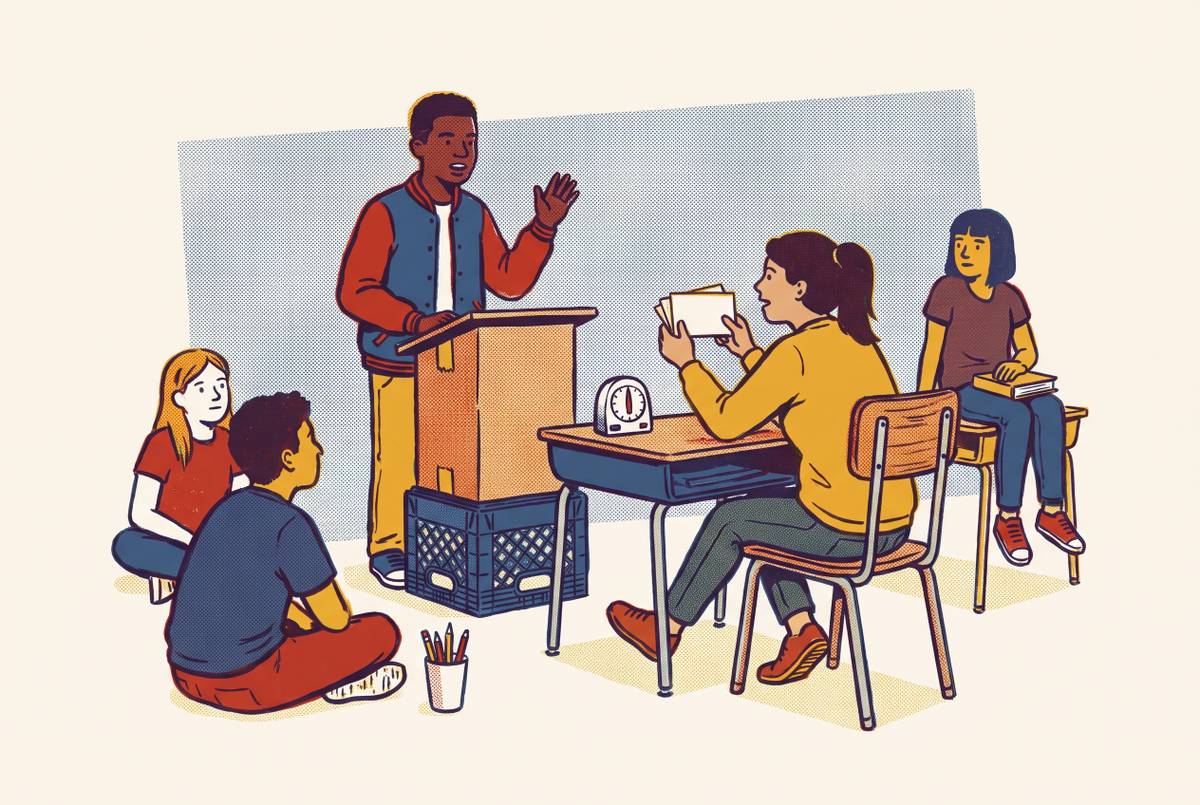
A school program gives students opponents, structure, feedback, and a competitive goal all in one place. Losing that program feels like losing debate because students usually get all those things together. Yet each can be sourced independently. Online matching helps students find opponents, while formats that anyone can use, topic rotation, and timed rounds give them a framework. AI judging changes the availability of feedback that once depended on finding a qualified judge.
The competitive goal is harder to replace. El Camino forensics coach Francesca Bishop argues that without a national tournament to recruit toward, students will not put in the hours required to get good. A practice opportunity does not automatically create a reason to return to it. Open online tournaments and leaderboards can provide that reason, but only when the student treats them as serious objectives.
A student can choose a schedule, complete more rounds than a team practice might allow, and receive feedback immediately. That flexibility is useful, but it imposes responsibility. Without a coach setting the next task, the student must turn a decision into a reason for the next round.
This is not a claim that a platform reproduces everything a strong team offers. A good coach still gives students a big advantage, and the one-on-one help is hard to replace. The narrower claim is sufficient. A student can rebuild the essential practice loop without waiting for a school to restore the original institutional arrangement.
How can students find real opponents and structured rounds without a school program?
Students who prepare on their own can still work toward events on the competitive circuit. The National Speech and Debate Tournament in 2026 drew more than 7,000 students from schools across the country and the globe to Richmond, VA. That scale demonstrates the wider activity’s continued availability after a local program closes, though individual entry remains subject to each tournament’s requirements. Club teams independent of a school can register for open online tournaments, providing a recognized competitive path for students whose programs have closed.
Students need more chances to practice each day than tournaments can give them. Online platforms match students with human opponents in real time for live voice rounds, so they can have a scored round without a school practice room. Options in this space include live 1v1 voice debate with an AI judge, structured competition with real-time audience voting, and community leaderboards. These features serve different purposes. Human opponents challenge students to answer another person on the spot, while scores and rankings give them something to compete for.
Written debate offers another form of access. ArguFight provides AI-judged written debate in standard mode, with five rounds and 24-hour response windows, and speed mode, with three rounds in one hour. Up to three AI judges score each debate from 0–100 and provide written reasoning. That structure supports sustained argument against real opponents. Because the exchange is written, however, it is not equivalent to practicing spoken clarity under live time pressure.
For solo structured rounds, PublicForumAI offers a full practice round against an AI, with real-time flowing and a judge ballot. Students on a high school debate team in New York City started it in 2024 specifically to serve students facing gaps in access. Students can enter tournaments, speak live with other people, debate in writing, or face an AI opponent. For a program with no budget, those functional differences help define the search, but the available information does not establish which options are free or what participation would cost.
How AI judging works and why the feedback it produces is worth acting on
AI judging turns a round into material that can be inspected. In live spoken formats, real-time speech transcription feeds an LLM-based evaluation against structured rubrics covering logical fallacies, evidence grounding, rebuttal strength, and speaker clarity. Students receive a written ballot immediately after the round. Speed is only part of its value. The more important feature is the connection between a judgment and the argument that produced it.
Debate Ladder scores logic, responsiveness, clarity, delivery, and persuasiveness. Its Elo rating also adjusts after each round according to the outcome and the opponent’s strength. Those outputs answer different questions. A rating locates a result within competition, while category scores identify aspects of performance that need attention. Neither replaces the reasoning in the ballot, because a number alone cannot explain which exchange determined the decision.
To assess a decision, look first at its per-argument citations. A useful ballot identifies a dropped claim, a rebuttal that landed, or a point where clarity broke down. Specificity makes the verdict usable and contestable. Published criteria and references to what was actually said make its basis more auditable than a single human judge’s intuitive call. A verdict that merely names the winner supplies no comparable instruction.
A rubric-based decision can guide practice without proving that every judgment is correct, and AI feedback is not a complete replacement for high-quality coaching. Disclosure is a separate requirement. EU AI Act Article 50, effective August 2, 2026, includes disclosure duties for direct AI interaction and specified synthetic-content and biometric uses, rather than a blanket duty covering every evaluation or score. Where a platform’s direct interaction falls under that rule, the student must be told before submitting a round.
Building a practice structure that produces the same developmental pressure as a team
Independent practice requires deliberate substitutes for a team’s recurring demands. Regular rounds create repetition, a coach notices habits, and a competitive goal gives preparation a deadline or direction. A platform supplies opportunities that require discipline to use. The practical task is therefore to connect a goal, a practice mode, and a feedback habit so that each round creates work for the next.
To create competitive pull, treat a public ranking or an open tournament as an objective. Debate Ladder and Rebuttal Live both use Elo systems in which public rank moves after every round. That gives independent practice visible consequences. It addresses Bishop’s concern about motivation without claiming that a leaderboard is identical to a national tournament. The goal must be important enough to organize preparation.
Debate Ladder offers a practice mode using typing instead of speaking, which can support format experimentation without risking rank. Use that space for experiments alongside live spoken rounds. The distinction preserves the skill being trained. To learn to answer aloud under pressure, a student still needs to practice in rounds with that pressure.
Students should also use steelmanning as they prepare for each new topic. Build the strongest case for the other side and explain why a reasonable person would find it convincing, rather than gather talking points that are easy to refute. The ideological Turing test provides a demanding self-check. Can the student present the other side so convincingly that its actual supporters cannot distinguish that presentation from one of their own? A structured AI prompt can help surface material by asking for the strongest arguments, the underlying values, and the beliefs that make the position seem reasonable.
A workable weekly cadence combines live human rounds for competitive pressure, solo AI rounds for targeted skill work, and one steelman exercise per new topic. Each component has a distinct job. The human exchange tests responsiveness, the solo round creates room for focused practice, and the steelman strengthens preparation. Maintaining that rhythm is itself a debating skill, because lasting practice requires self-directed work.
What genuine improvement in live spoken argument actually looks like and how to measure it
Improvement appears in the structure of an argument before it can be reduced to a win rate. Claims become easier to follow because their reasoning is explicit. Responses address what the opponent actually said. Clarity survives the pressure of the clock. These are recognizable changes in performance, and they map directly onto the logic, responsiveness, and clarity dimensions that AI judges score.
To measure those changes, track category scores across decisions rather than treating the aggregate score as the endpoint. Strong logic combined with persistently weak responsiveness identifies a specific task. The student struggles to connect an answer to the opponent’s case despite being able to construct a sound argument independently. The reasoning for each argument then shows exactly where this happened, pointing to an objection that went unanswered or a response that answered it well.
The resulting habits can extend beyond competition. The Strategic Education Research Partnership (SERP) Institute, in a study with researchers tied to universities, found that debaters start to weigh every contention as they read without having to think about doing so. Argument evaluation becomes a habit of attention. Research published in the International Journal of Research and Innovation in Social Science in 2024 also found that debating techniques nurture open-mindedness by requiring students to consider multiple perspectives.
The demanding standard is therefore more than accumulating rounds or improving rank. A developing debater can present the opposing side convincingly, answer its strongest objection rather than its weakest, and explain why a specific exchange was won or lost. Those abilities give feedback an observable destination. They also distinguish meaningful progress from familiarity with a platform’s scoring system.
Independent practice is a genuine alternative to no practice, with limits as a substitute for a well-resourced team, particularly when strong coaching is missing, and school funding need not determine access to every route forward. A school’s decision can remove the program. It does not have to decide whether the student continues developing.