From First Argument to Final Ballot With No Teammate No Coach and No Room Booked
AI voice opponents and scored ballots let underfunded programs practice debate entirely solo.
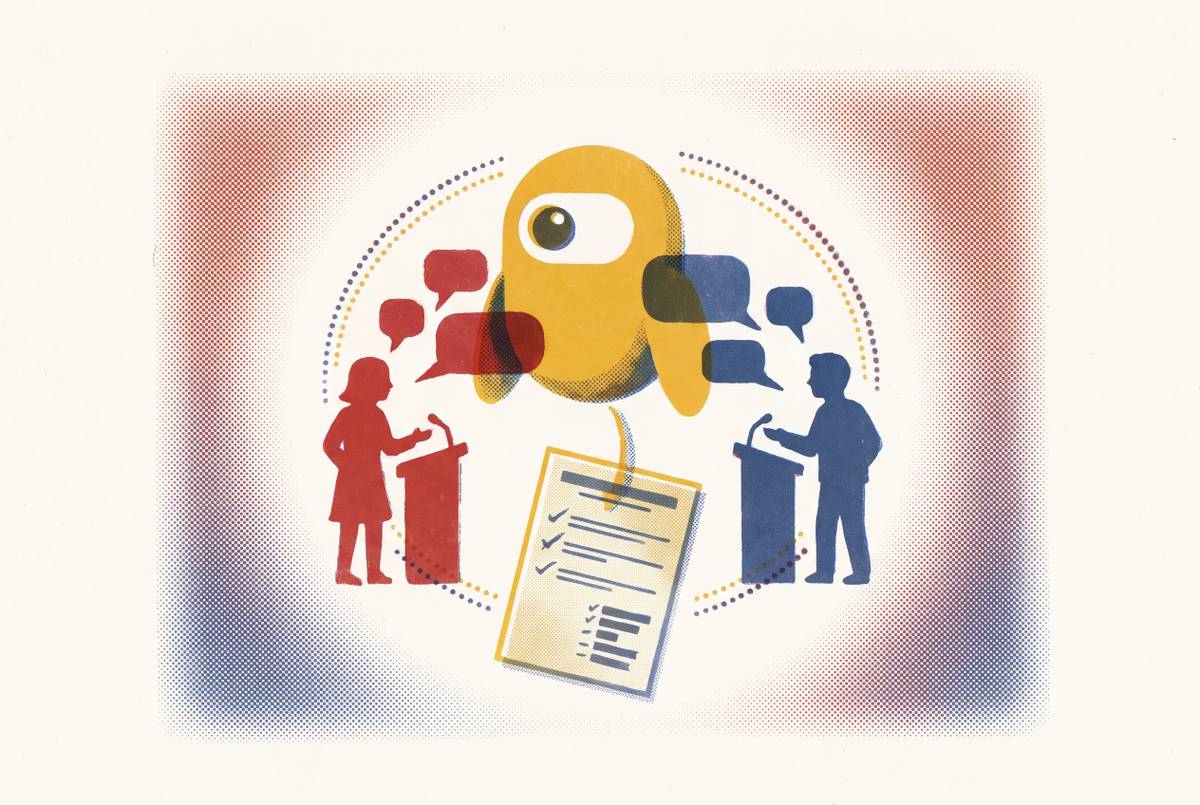
AI voice rounds with an opponent and a scored ballot offer underfunded high school programs a way to practice debate without a coach, teammate, or booked room. The complete path runs from an opening case through live rebuttal to a decision that identifies what to improve. For programs seeking free or low-cost tools, the essential criteria are timed opposition, transparent scoring, and specific feedback, though the information available here does not establish a free tier or price.
Why debate has always required other people — and what changed
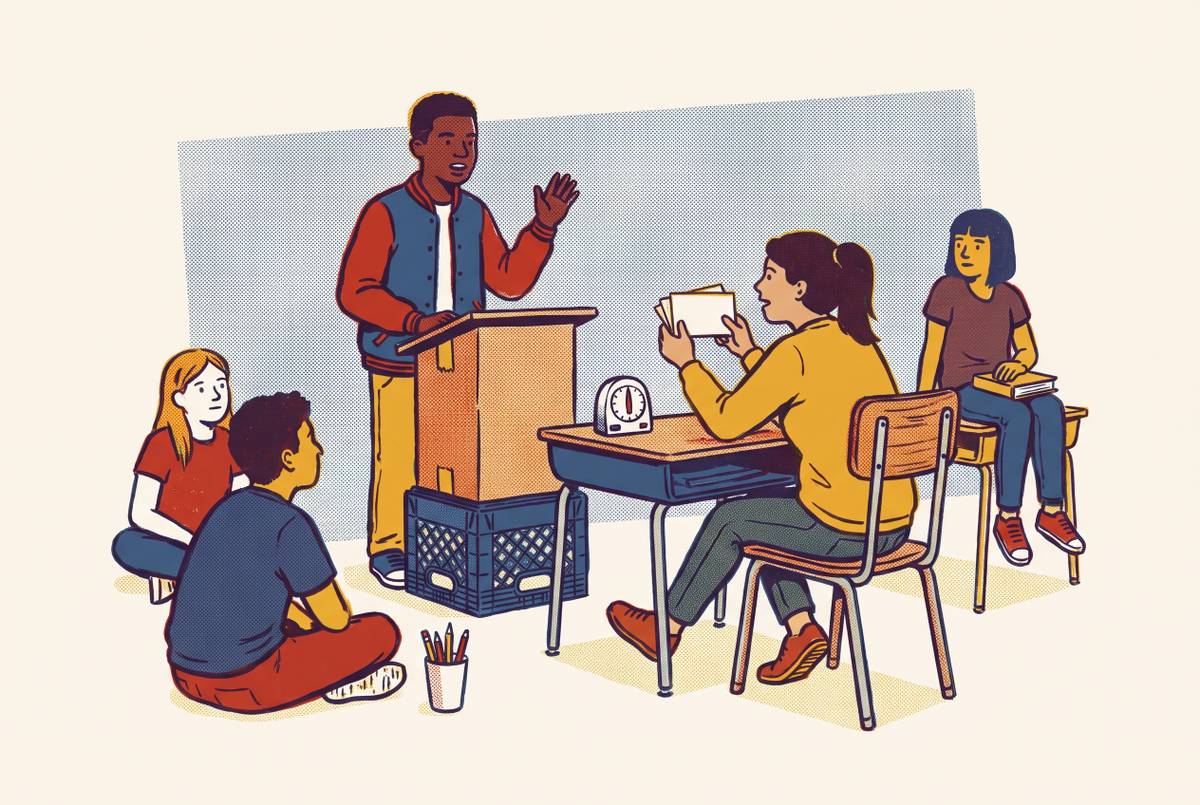
Traditional debate practice depended on an opponent, a judge, and a coach, usually brought together at a scheduled time in a shared space. Each supplied a different function. The opponent created live resistance, the judge delivered a scored decision, and the coach turned that decision into further practice. School teams, university societies, and funded programs could organize those dependencies, while people outside them often lacked a complete route into judged debate.
AI can now perform those three roles within a timed round that starts on demand. A debater still has to establish a position, answer objections, and persuade a judge through what is actually said. Beginning that process no longer requires assembling other people first.
What a complete debate arc actually consists of
A complete debate arc has three stages: the opening case, live rebuttal, and final ballot. In competitive rounds, the speaking takes place through constructive speeches, cross-examination, rebuttals, and closing or summary speeches. Each stage has a defined job to do. The opening establishes the argument on record, the exchange tests it against opposition, and the ballot evaluates the result.
The opening gives a position, a warrant explaining why it is true, and an impact explaining its significance. Live rebuttal attacks the opposing case while building on the strongest part of the speaker’s own case that still stands. The ballot then assesses logic, response quality, clarity, and persuasion against what both sides said. Fixed motion phrasing helps make the burden of proof clear before this sequence begins. “This house would” introduces a proposed policy change, while “This house believes” introduces a value claim, so the proposing side knows what it must defend.
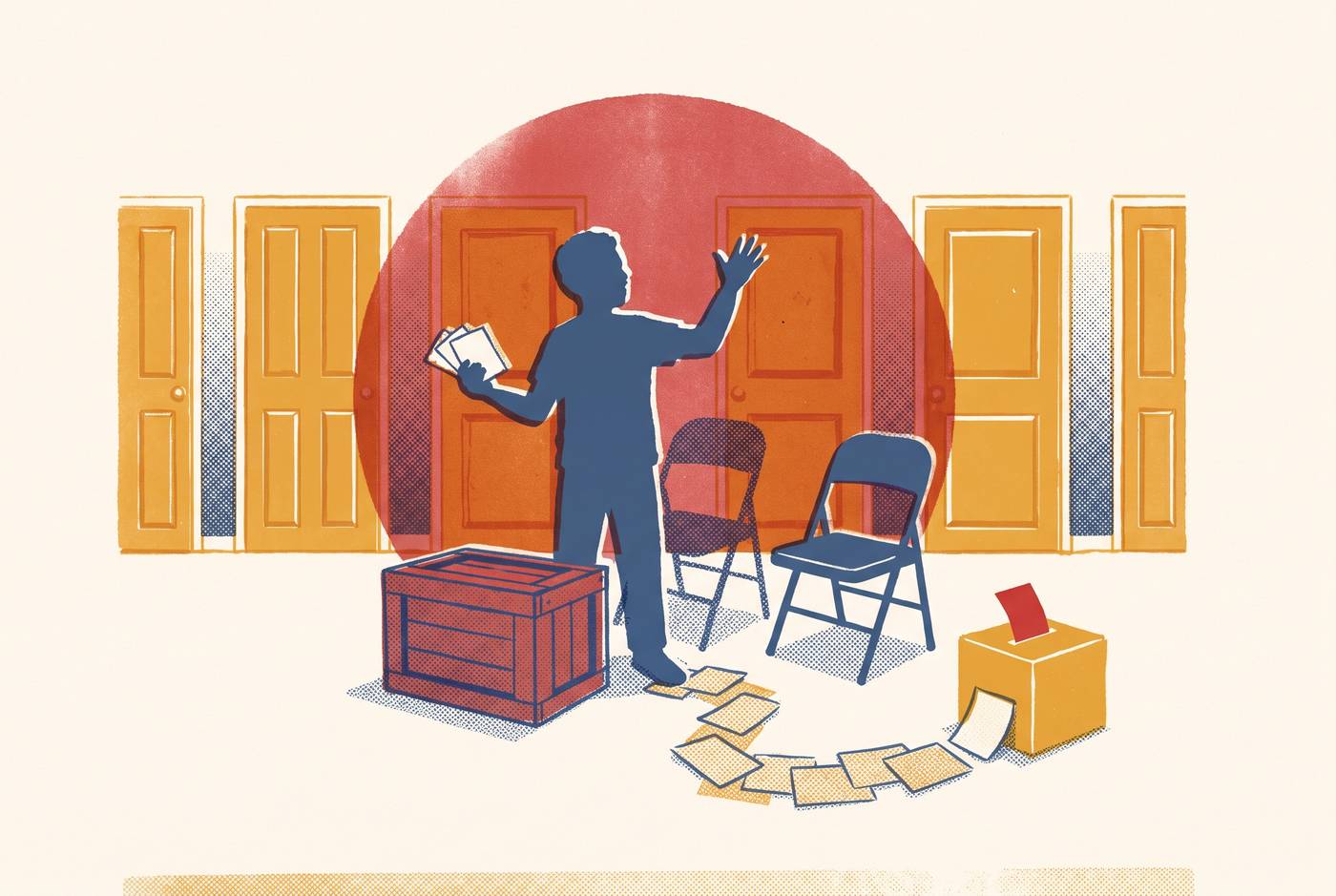
How to choose a motion that gives you a real round
A useful motion gives the sides something to disagree on that evidence can help them weigh without settling it outright. Three filters establish that condition. The motion should ask a question of value or policy rather than a settled factual question, have no obvious right answer on a twenty-second sniff test, and allow both sides to build an evidence-supported case. A topic that invites easy agreement gives the opponent little to attack. Without that clash, the round cannot give rebuttal a proper test.
The distinction is clear in climate questions. “Is the Earth warming?” asks for a scientific answer, while “Should rich countries pay poorer ones to cut emissions?” asks how to distribute costs and responsibilities. Facts inform the second question, but values and trade-offs determine the position. Policy motions ask if something should be done, value motions ask if something is better or worse, and prediction motions ask if something would work.
For solo practice, take the side that conflicts with your own view. Conviction cannot do the argumentative work there. Before attacking the opposing position, state its strongest form so that the eventual rebuttal answers a serious case. This also prepares the opening for the strongest objection it is likely to face.
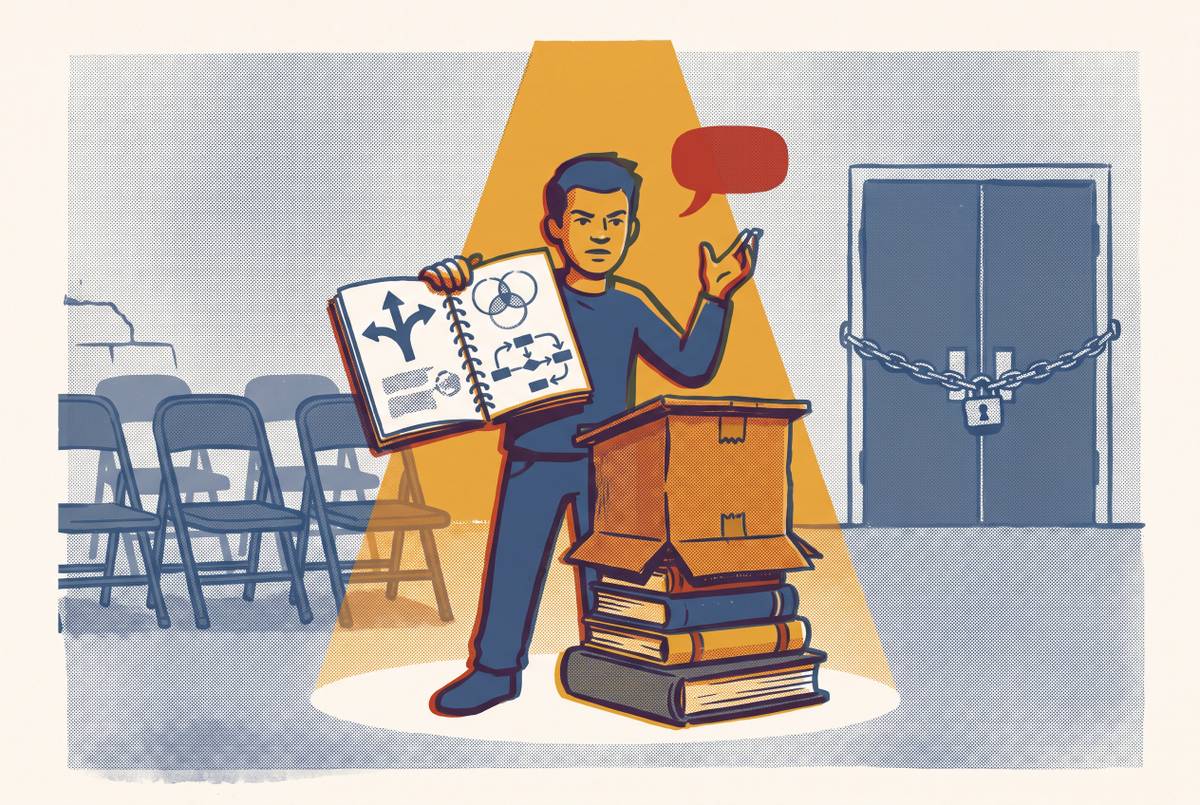
Building the opening case without a coach in the room
The two-minute argument drill turns a selected motion into a spoken case. Set a timer. Give a claim, warrant, evidence, and impact before it runs out. The claim states the position being defended. The warrant explains why it is true, the evidence supports that explanation through a fact, example, or logical chain, and the impact gives the judge a reason to prefer it. All four parts need to be audible.
Speaking is the point of the constraint. An argument can look complete on paper even when the speaker cannot explain how the evidence leads to the conclusion with time running short. Recording the drill and playing it back makes that gap easier to locate. Playback also exposes unnecessary hedging, including “kind of” and “maybe,” that weakens delivery without adding useful qualification. Cutting those phrases improves the surface of the speech, but the opening still needs a complete warrant because everything that follows responds to the case actually delivered.
Training live rebuttal when there is no one to argue with
A solo rebuttal drill needs a strong opposing case, even when it has no live opponent. Write the strongest argument for the other side, then stand up and answer it aloud within a tight time limit. The limit forces a choice about what to attack. That prioritization is the skill under examination, since answering every sentence superficially is different from identifying the point on which the case depends. An artificially weak opposing case removes precisely that difficulty.
Tracking the argument is a separate discipline. During practice rounds, keep a running written log, called a flow, of the opposing points in their original order. Even a simple column of bullet points helps keep earlier arguments in view as new ones come in. The purpose is to avoid answering only the last thing heard and leaving an important claim untouched.
Live AI voice rounds add interaction that a prepared drill cannot supply. The opponent gives its own case, can take points of information mid-speech, and calls for an answer right away. The drill builds the skill, while the live round tests it as conditions change. Neither should be treated as a complete replacement for human opposition, which adds a competitor adapting specifically to win.
How the AI judge scores a round and what the ballot actually tells you
An AI ballot becomes useful when its reasons can be traced to statements made during the round. A decision that cites the relevant argument can show whether the problem lay in reasoning, support, delivery, or response. Those dimensions distinguish the quality of the original case from the quality of its defense.
Transparency is the condition for evaluating such a decision. Scoring rules should be public before the round begins so that the debater can compare the ballot with a known standard. A chance to appeal the decision adds a safeguard when the explanation seems at odds with that standard. Neither feature establishes that the judge is neutral.
AI judges may show biases from their training data on topics shaped by norms or tied to a particular culture. That limitation affects the authority a practice ballot deserves while leaving room for useful feedback. The defensible comparison is with having no scored feedback during solo practice.
Reading your decision to find the one thing worth fixing next
The written reasons are the starting point for improvement. After a round, isolate the single argument the judge identified as weakest and determine which part failed. An unclear claim needs to be said more clearly, a missing warrant needs its reasoning spoken aloud, thin evidence needs more support, and an unconnected impact needs an explanation of why it matters. These are different defects, even when they produce a similar score. If the judge flags an ad hominem, straw man, or false dilemma, that becomes a priority repair because an opponent can exploit the same fault.
The drill-to-round ratio is more important than accumulating rounds. Full rounds reveal weaknesses but do not isolate them. One round followed by targeted rebuttal repetitions on its weakest point provides a more focused training structure than three consecutive rounds that leave the defect untouched. The next full round then gives another verdict and tests whether the fix holds up under pressure.
On a research day, read on the topic and pull two evidence points per article. On a drill day, isolate one skill through timed rebuttal repetitions or by flowing a recorded speech and comparing the result. On a round day, test the repaired skill against opposition. Each day has a distinct job, so preparation does not become a substitute for performance or performance a substitute for correction.
The path from solo rounds to ranked live play
Solo AI rounds build habits for case construction and rebuttal before the debater puts them to use against a human competitor. Live ranked 1v1 play changes the pressure. The opponent is also trying to win and can adapt specifically to the debater’s choices, while the ballot remains AI-judged.
A public leaderboard that ranks players by their best scores gives them a goal to work toward along the way. It shows when a scored performance has improved, so players have more than their own judgment to go on. For top performers, the path can extend to creator and streamer matchups before a live audience. Rank establishes consideration. An invitation also depends on a creator participating, the topic fitting, and both sides being available for the live slot.
What tools help high school students practice without a coach and avoid the same plateau as school teams?
Useful tools include recordings of spoken drills, a flow to track arguments, timed AI opposition, and a scored decision that shows which parts need work. These serve different training needs. A recording reveals what the speaker delivered, a flow preserves the opposing case, and an interactive round tests responses that cannot be fully rehearsed. The ballot adds an outside judgment to the speaker’s own sense of how the speech felt. None of these functions requires the practitioner to begin as a member of a funded team.
Most competitive school teams run one or two sessions a week, with at least one full practice round every week or two. That schedule creates opportunities to compete, but a program built only around complete rounds can leave individual defects unaddressed. A self-taught debater can get stuck in the same way by repeating solo rounds without working on specific flaws. Both settings need scored feedback connected to deliberate practice.
Debate training is therefore closer to chess training than to classroom discussion. A real opponent and a score expose the result, while focused drills develop the skill responsible for it. Access to those conditions has historically depended on school resources and team funding. The solo path removes that institutional dependency without changing the scoring standard according to the debater’s background. For an underfunded program, the solo path gives students a way to go through the full training cycle as well as a place to share their views.
The one move that starts the arc tonight
The first round does not require a prepared speech, a competitive background, or a scheduled opponent. Its purpose is to produce a starting diagnosis. Pick a motion that divides your own thinking and take the side that is harder to defend. Treat the weakest point identified in the resulting ballot as the target for the next practice session. Start a timed AI round and put the opening case on record.