Practicing Debate When Your Opponent Speaks a Different Variety of English
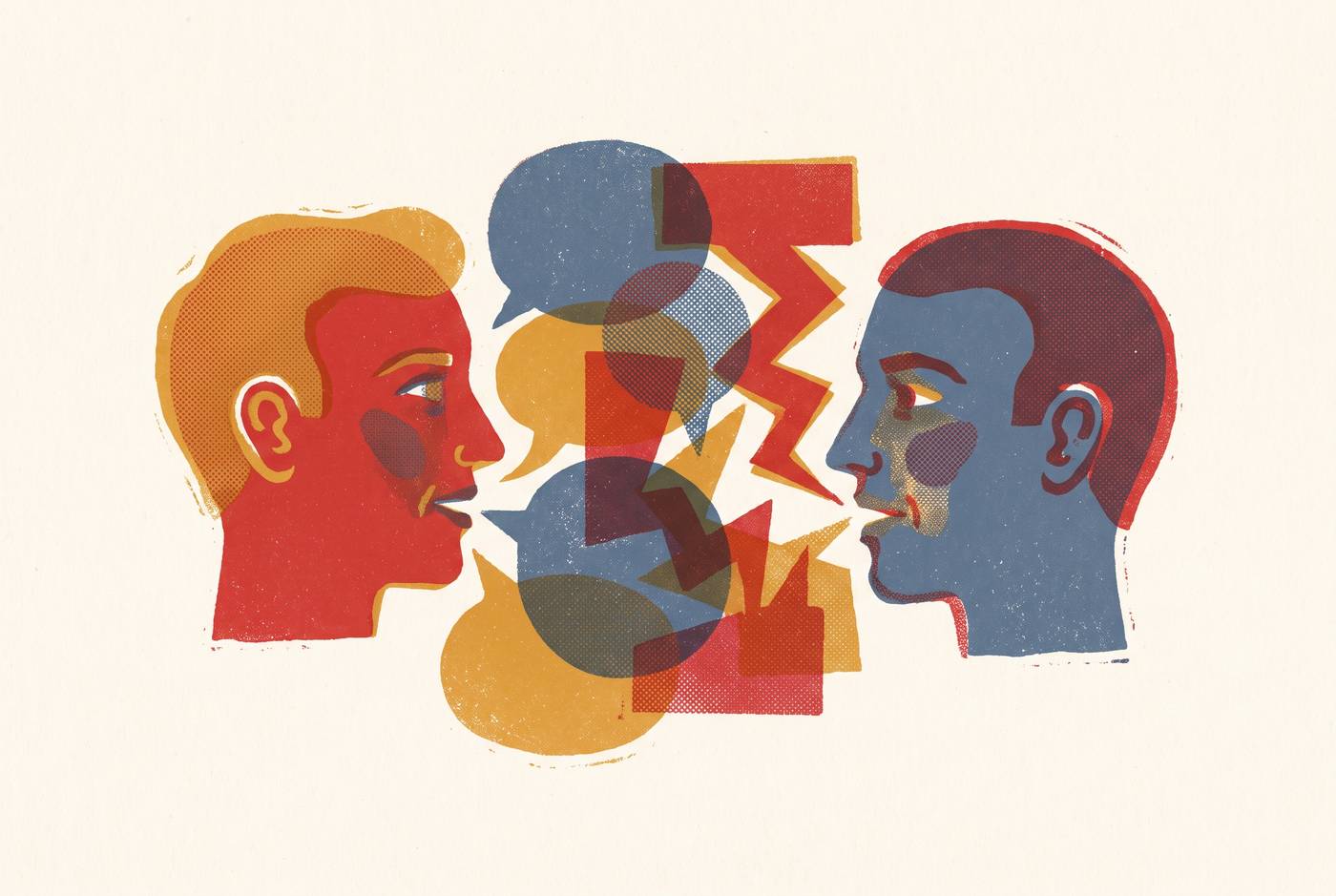
A debater facing an opponent who speaks a different variety of English is doing two jobs at once: rebuilding the opponent's argument accurately, in real time, while decoding phonology, rhythm, and phrasing that may not match anything the debater has trained on. English in practice is not a single, uniform system but a wide set of varieties, including American, British, Indian, Nigerian, Singaporean, Canadian, and Malaysian English, each carrying its own sound patterns and sentence rhythms. When two speakers of different varieties meet in a round, you get two different sets of phonological rules running at competitive speed, with no built-in allowance for the listener to catch up. This is a concrete processing load, closer to simultaneous interpretation than to ordinary listening, because you don't know the content or the sound of the content. If you miss a syllable here, you can miss a claim, and in competitive debate a missed claim can mean a missed rebuttal, a dropped argument, or a round lost on a technicality that had nothing to do with the strength of anyone's case.
Why that difficulty is an asset when you train into it
The conditions that make cross-variety rounds hard are the same conditions that build the most transferable skills in debate: active listening, fast argument reconstruction, and the ability to adapt mid-round to something unexpected. A debater who only ever practices against opponents who sound familiar is practicing a narrower skill than the format actually demands, because tournaments do not sort entrants by accent, and neither does the real world of negotiation, law, journalism, or public argument. Facing a range of speech patterns at full competitive speed, with no concessions made for listening comprehension, is uncomfortable, but it is close training for the kind of listening that matters outside the debate room as well. What is actually being trained in a cross-variety round is the capacity to separate what someone means from how they sound, responding to the claim itself. That separation is active listening in its most demanding form, because you have to hold attention on structure and evidence while your brain wants to lean on familiar cues to speed up comprehension. The benefit appears under pressure: a debater who has already worked through unfamiliar phonology mid-round is far less likely to be thrown by an unexpected opponent style walking into an elimination round at a tournament. The obvious objection is that unfamiliar varieties slow comprehension enough to cost rounds before the skill has time to develop, and that objection is fair as far as it goes. But it is true of every form of difficult practice worth doing, and the answer is to seek the difficulty out deliberately, on a schedule the debater controls, before it shows up uninvited on tournament day.
Accent bias in human judging makes cross-variety rounds genuinely unfair
The fairness problem in cross-variety debate does not live in the round itself. It lives in who is scoring it. Human judges, like anyone listening to speech, carry documented linguistic bias, and it links accent to perceived credibility in ways that have nothing to do with the quality of an argument. The philosophical literature on this subject draws a precise line: when speech that is fully understandable still leads a listener to rate the speaker as less credible simply because the speech carries an accent, that is linguistic bias, since accent and credibility are not actually related. Much of the work cited in that literature argues that this bias contributes to a pattern where LX English users, those who learned English as an additional language, are perceived as lower in status and less credible than L1 English users, regardless of what they actually argued. That is a structural disadvantage built into the listener, not a flaw in the speaker's case. So if a debater reasons well but speaks a less familiar variety of English, that debater may consistently draw lower speaker points from human judges, because the accent triggered an unconscious discount on credibility. So the lesson for judging generally is that keeping cross-variety rounds out of the schedule does not make the scoring any fairer. It is solved by changing what the judge is actually scoring, shifting the basis of the decision from how a debater sounds to what a debater argued.
What AI judging can and cannot fix in cross-variety judging
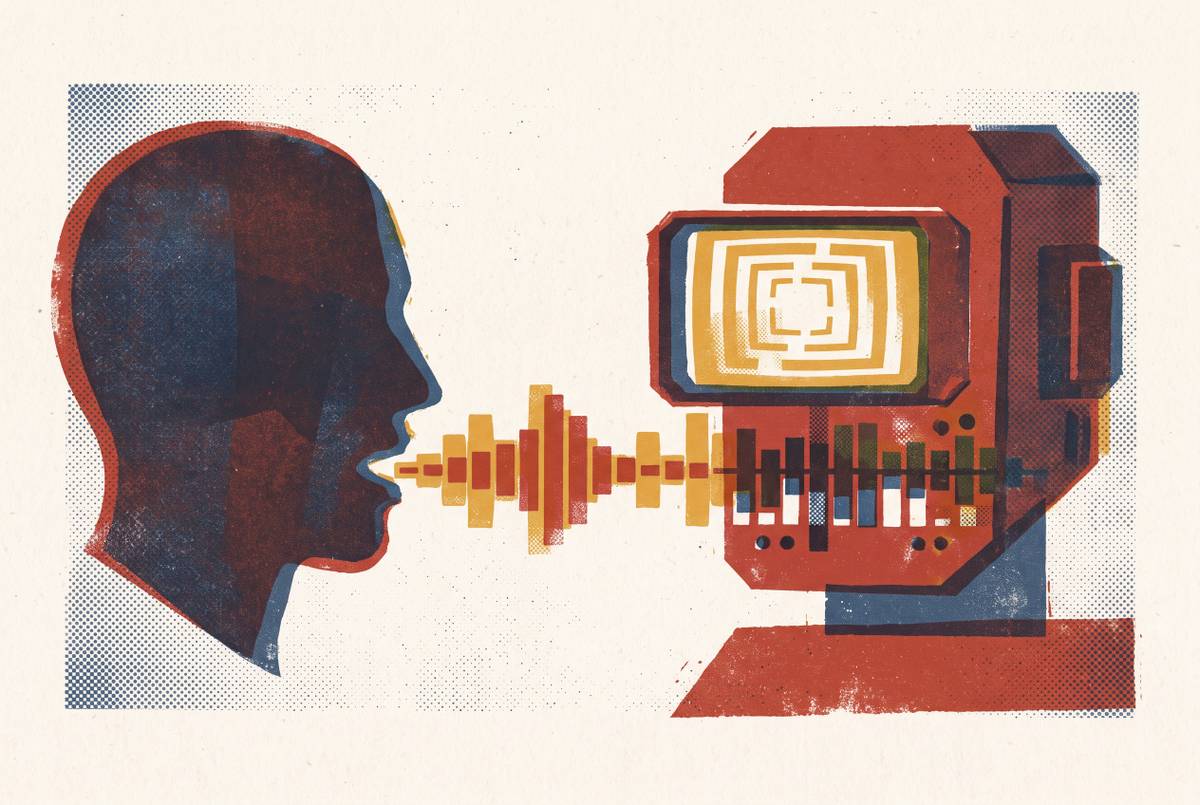
An AI judge built to score argument structure, meaning logic, quality of responses, clash between the two sides, and impact, rather than speaker affect, offers a real path around accent-credibility bias. That promise holds only if the speech recognition system feeding the judge does not introduce its own variety-dependent errors upstream of the scoring. Automatic speech recognition systems have a documented record of not capturing the full range of accents and dialects at equal accuracy, and a paper presented at ICASSP 2025 examined performance bias in ASR systems across gender, age, accent, and other factors, finding that users of color and non-native English speakers may face particular disadvantages in transcription accuracy. If an AI judge works from a transcript of a spoken round rather than live audio, that transcription step can put a source of disadvantage tied to variety upstream of whatever scoring rubric the judge applies downstream. The most important structural fix here is basic transparency: a scoring rubric published before the round starts, so the debater knows what is being measured, paired with an appeal pathway to a human reviewer who can catch and correct an error that an automated system produced without explanation. None of this erases the limitation. Applying a consistent, published rubric the same way regardless of accent already improves on human judges who carry documented implicit bias into the room, so the honest position for any platform is to acknowledge the ASR layer as a live, ongoing limitation.
Using practice rounds to develop cross-variety listening as a trainable skill
Cross-variety listening improves the way any other perceptual skill improves: you need repeated exposure, feedback on what you missed, and correction before the next attempt. The most workable starting point is practice against AI opponents whose voice and pacing can be varied deliberately, which builds baseline processing speed before the stakes of a live, adversarial round are added on top. From there, the next step is live one-on-one rounds against real opponents matched specifically across variety lines, since natural speech paired with a genuine adversarial argument produces the hardest and most useful practice a debater can get, closer to what an actual tournament round demands than any scripted exercise. Practice Debate, built by DebatePro, supports this progression directly: it offers voice interaction with an AI opponent across formats including Lincoln-Douglas, Public Forum, Policy, and Parliamentary debate, gives feedback on speech delivery such as pacing and filler words, and separates that from AI judging feedback focused on the argumentation itself, which makes it a reasonable place to build processing speed before stepping into a live round. Tournament formats push you toward that same skill in a way practice alone can't fully replicate. In Lincoln-Douglas debate, you have to argue both sides of a resolution across the course of a tournament, so you cannot simply settle on the side that feels culturally comfortable and stay there round after round. The 2026 NSDA National Tournament Lincoln-Douglas topic, Resolved: Democracies ought to prioritize the protection of civil liberties over national security, requires every debater to build both cases with equal conviction, regardless of personal or cultural starting point, and that compulsory side-switching builds the same muscle that cross-variety listening does: the capacity to understand and respond to a framing of the issue that is not one's own.
Reading the judge's decision after a cross-variety round to extract the right lesson
The written decision that follows a cross-variety round works less like a verdict and more like a map, since it shows you which of the opponent's arguments went through unanswered. Those unanswered arguments are the likeliest spots where something got misheard, misread, or reconstructed incorrectly under time pressure, so the decision becomes a direct record of where listening broke down, not just where the case did. When category scores pull apart within that decision, the pattern itself carries information: a strong logic score paired with a weak response score suggests the debater followed the opponent's structure correctly but missed the specific claim that actually needed an answer. Equally useful is whatever the decision quotes directly from what was said in the round, because a decision that cites the opponent's own wording gives the debater a way to check, after the fact, whether that wording was processed correctly in the moment it was spoken. Judging tools built for this purpose, such as Judging GPT, are designed to simulate the reasoning of an experienced human adjudicator, weighing arguments, style, strategy, and engagement, and the resulting written output hands the debater the reasoning behind a score. If you review a cross-variety round against its written decision this way, you turn it into one of the most efficient forms of practice available, because it closes the loop between a real listening failure and the specific correction you need to fix it before the next round begins.
Sources
- UNIT 5 DEBATE OVER NATIVE AND NON- NATIVE ENGLISH Structure Objectives
- Full article: The philosophical debate on linguistic bias: A critical perspective
- Trans-EnV: A Framework for Evaluating the Linguistic Robustness of LLMs Against English Varieties
- English as a Global Language: The Case for Teaching Different Accents and Dialects - BridgeUniverse - TEFL Blog, News, Tips & Resources
- Accentism in research
- "This Wasn't Made for Me": Recentering User Experience and Emotional Impact in the Evaluation of ASR Bias
- Toward Fair Speech Technologies: A Comprehensive Survey of Bias and Fairness in Speech AI
- Topics